
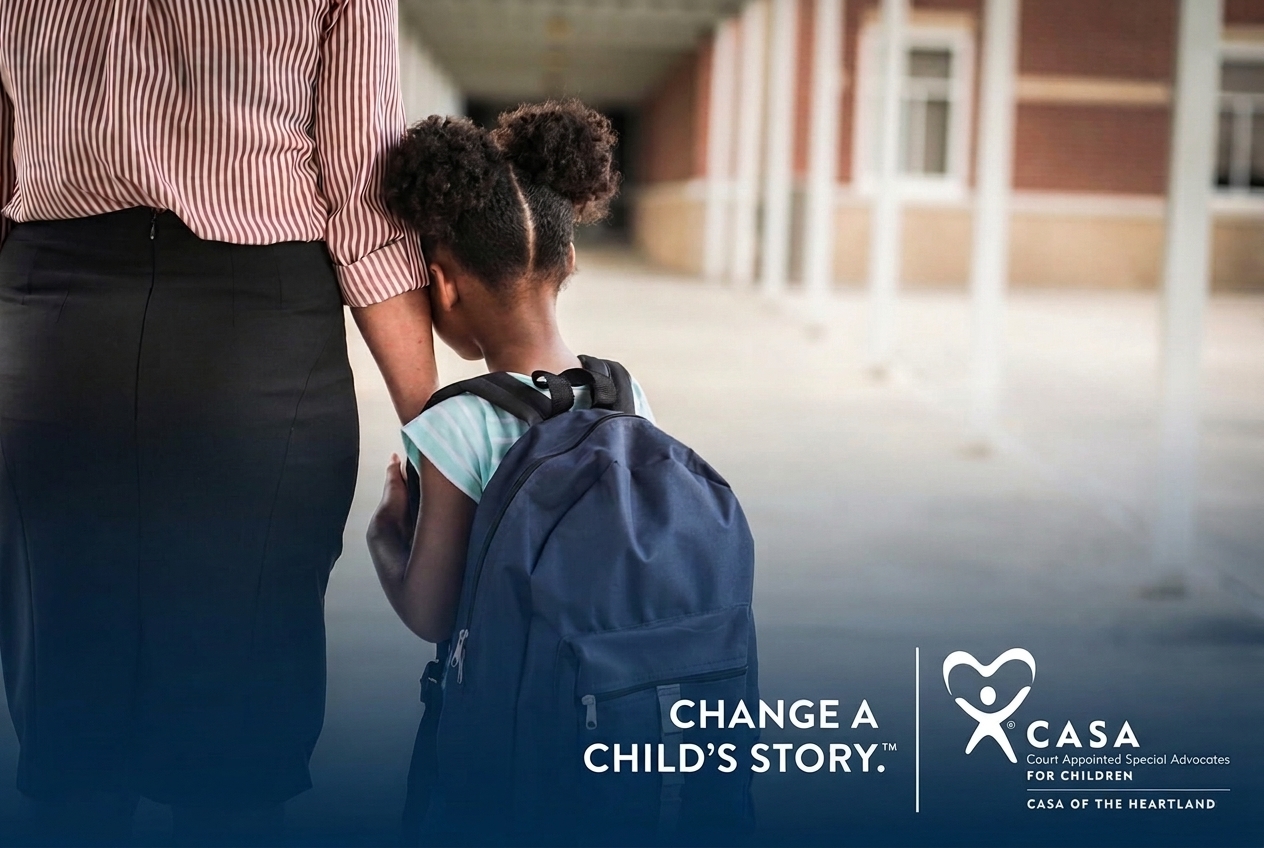
Back to School Looks Different for Every Child
Back-to-school season has a certain magic to it.
New notebooks. New shoes. First-day photos on the front porch.
For many children, it is a season of excitement, fresh starts, and possibility.
But back to school looks different for every child.
For some children, especially those in foster care, kinship care, or families experiencing significant change, the start of a new school year is simply one more transition in a year already full of them. The excitement may still be there, but so is the uncertainty.
Not Every Child Returns to the Same Kind of Summer
Some children walk into school from homes that are safe, familiar, and predictable. Others arrive from a new foster home, a grandparent's house, or a living situation that still feels uncertain.
For a child experiencing family changes, the first day of school may come just days after a placement change, a court hearing, or moving in with a new caregiver who is still learning their routines.
When we remember that back to school looks different for every child, it becomes easier to respond with compassion instead of confusion or frustration.
Challenges That Often Go Unseen
Children navigating family transitions often face back-to-school challenges their classmates never have to think about.
Transportation and logistics. When a placement changes, bus routes and pickup plans often change, too. A child may be late or absent while the adults in their life work through new arrangements.
Paperwork and records. Enrollment forms, emergency contacts, and school records can be delayed, especially when multiple adults share responsibility for a child's care.
Emotional regulation. A child who has experienced instability may be more sensitive to change, become overwhelmed more easily, or struggle to regulate their emotions during stressful moments.
Attendance and engagement. Court hearings, family visits, therapy appointments, and other required meetings can take children out of the classroom, making it more difficult to keep up academically and socially.
Academic gaps. Changing schools or missing instructional time can create learning gaps that may look like a lack of effort when they are really the result of interrupted education.
None of these are signs that a child doesn't care about school. More often, they are signs that a child is doing their very best while navigating circumstances beyond their control.
Small Moments Matter
You do not need special training to make this season easier for a child.
Teachers, bus drivers, coaches, youth leaders, neighbors, and other caring adults all have opportunities to help children feel safe, welcomed, and supported.
Pause before assuming a struggling student is lazy or uninterested.
Use welcoming language, such as "your grown-ups" or "the adults at home," instead of assuming every child lives with a mom and dad.
Be patient when paperwork takes longer than expected.
Offer predictable routines and look for small moments of connection, whether that is greeting a child by name, noticing a positive effort, or checking in after a difficult day.
Small moments may not seem significant to us, but they can make all the difference to a child.
Where CASA Fits In
For children involved in the court system, CASA of the Heartland volunteers provide another layer of consistency during an uncertain time.
Appointed by judges, our trained volunteers advocate for a child's best interests, and education is an important part of that role. They help identify school-related concerns, encourage educational stability whenever possible, and ensure a child's academic, social, and emotional needs remain part of the conversation as important decisions are made about their future.
A Season for Empathy
As another school year begins, every child deserves the opportunity to feel safe, supported, and ready to learn.
Sometimes, the greatest thing we can offer a child is not a solution. It is patience. It is understanding. It is the willingness to remember that we may only be seeing a small part of their story.
Because back to school looks different for every child, but every child deserves to know they belong.
To learn more about how CASA of the Heartland supports children through seasons of change, visit casaheartland.org.